How to Ensure High Availability for Your CRM System with Hosting is crucial for any business relying on CRM data. A reliable system minimizes downtime, ensures data integrity, and ultimately boosts productivity. This guide delves into the essential components, strategies, and considerations for achieving high availability for your CRM, covering everything from choosing the right hosting provider to implementing robust failover mechanisms.
Get ready to maximize your CRM system’s uptime and ensure business continuity.
This comprehensive guide breaks down the complexities of high-availability CRM hosting into actionable steps. From understanding the fundamental principles to implementing practical solutions, we’ll equip you with the knowledge and tools to safeguard your CRM system from potential disruptions.
Introduction to High Availability CRM Hosting
High availability in CRM hosting isn’t just a fancy term; it’s the lifeblood of any business relying on its CRM system. Imagine your CRM system as the engine of your sales machine. If that engine sputters and dies, your sales grind to a halt. High availability ensures your CRM is always running smoothly, preventing costly downtime and keeping your business moving forward.
This means your sales team can access the data they need, your marketing team can execute campaigns without interruption, and your entire operation can continue working without hiccups.High availability for CRM hosting translates to a significantly reduced risk of service interruptions, allowing businesses to maintain consistent operations and avoid significant financial losses associated with downtime. It’s about ensuring your CRM system is always there, ready to support your business needs, no matter what.
This translates to a more stable and predictable business environment, allowing your team to focus on growth and expansion without the constant worry of system failures. Crucially, it builds customer trust and confidence in your ability to deliver services consistently.
Defining High Availability in CRM Systems
High availability in a CRM context means the system is designed and maintained to operate continuously, with minimal or no downtime. This isn’t just about having a backup; it’s about a system that’s constantly running, with redundancy built into the infrastructure. It involves various measures to ensure uninterrupted access to the system, from robust servers to failover mechanisms and disaster recovery plans.
Benefits of High Availability for Businesses
High availability for CRM systems brings a wide range of advantages for businesses. It streamlines operations, reduces potential revenue loss, and boosts overall efficiency. Consistent access to CRM data empowers your teams to make informed decisions, improving productivity and ultimately driving business growth.
- Reduced Downtime: Minimizing downtime translates directly to fewer lost sales opportunities, improved customer satisfaction, and a more predictable business environment. Imagine your sales team struggling to access customer data during a system outage. This leads to frustration, missed deals, and potential loss of revenue. High availability minimizes this risk.
- Improved Data Integrity: High availability systems often include advanced data backup and recovery mechanisms. This safeguards your critical customer data, ensuring it’s readily available and prevents data loss in the event of a system failure.
- Enhanced Customer Experience: A reliable CRM system translates to a better customer experience. Customers appreciate consistent service and access to information. High availability directly contributes to a smoother and more satisfying customer journey.
Importance of Choosing a Reliable Hosting Provider
The hosting provider you choose is paramount to ensuring high availability. They are the foundation of your CRM system’s reliability and uptime. A reputable hosting provider will invest in robust infrastructure, redundant systems, and experienced support teams to maintain your system’s performance and availability.Choosing a provider that prioritizes high availability is crucial. They should have a proven track record of maintaining uptime and responding quickly to any issues.
Look for providers with multiple data centers and redundant network connections. These measures minimize the risk of outages and ensure your CRM is always accessible.
Hosting Type Comparison for High Availability
Different hosting types offer varying levels of resource allocation and control. The right choice depends on your specific needs and budget. A thorough understanding of these options is crucial for making an informed decision.
| Hosting Type | Suitability for High Availability | Pros | Cons |
|---|---|---|---|
| Shared Hosting | Low | Cost-effective | Limited resources, potential for performance issues due to shared resources, less control over the environment. |
| VPS Hosting | Medium | More resources than shared hosting, better control than shared hosting, good balance of cost and performance | Still susceptible to issues from other VPS users on the same server, more complex to manage than shared hosting. |
| Dedicated Hosting | High | Full control over resources, highly customizable, excellent performance, minimal risk of interference from other users | Most expensive option, requires significant technical expertise for management |
Key Components of a High Availability CRM Solution: How To Ensure High Availability For Your CRM System With Hosting
High availability for your CRM isn’t just a nice-to-have; it’s a necessity in today’s fast-paced business world. Downtime translates directly to lost revenue, frustrated customers, and damaged brand reputation. A robust high availability solution ensures your CRM system is always running, keeping your business humming along smoothly. Let’s dive into the critical components that make this happen.High availability CRM hosting isn’t just about having servers; it’s about a carefully engineered system that anticipates and mitigates potential failures.
It’s about redundancy, backups, and a well-defined disaster recovery plan. The right components will give you peace of mind, knowing your CRM data is safe and accessible 24/7.
Redundant Hardware and Software
Ensuring constant uptime requires a fail-safe approach. Redundant hardware, like multiple servers, and software solutions provide a safety net. If one server crashes, the redundant system seamlessly takes over, maintaining operations without interruption. This is crucial for handling peak loads and unexpected outages. Think of it as having a backup quarterback for your business’s data.
A good example is Amazon Web Services’ auto-scaling feature, which dynamically adds or removes resources to maintain optimal performance.
Data Backups and Recovery Procedures
Data is the lifeblood of any CRM. Robust backups and recovery procedures are paramount. Regular backups, both full and incremental, safeguard your data against various threats. This allows you to quickly restore your system to a previous state if something goes wrong. Consider using cloud-based backup solutions, offering geographical redundancy for enhanced safety and reduced recovery time.
Backup Strategies
Different backup strategies cater to varying needs and budgets. Choosing the right one depends on your specific circumstances.
- Full Backups: A complete copy of all data. Pros: Comprehensive recovery. Cons: Time-consuming and large storage space requirements.
- Incremental Backups: Backups only of the changes made since the last backup. Pros: Faster and require less storage space than full backups. Cons: More complex restoration process.
- Differential Backups: Backups of all changes made since the last full backup. Pros: Faster than full backups and require less storage space than full backups. Cons: More complex restoration process.
- Cloud-Based Backups: Backups stored off-site in the cloud. Pros: Automatic backups, data security, and easy access from anywhere. Cons: Dependence on internet connectivity and potential costs.
Disaster Recovery Plan
A well-defined disaster recovery plan (DRP) Artikels the steps to take if a major disruption occurs. This plan ensures your business can quickly resume operations and minimize downtime. Having a clear plan, documented and regularly tested, is a key part of mitigating risks.
| Step | Description |
|---|---|
| Identify Critical Systems | Pinpoint the CRM and related systems essential for business operations. |
| Establish Recovery Point Objective (RPO) | Define the maximum acceptable data loss after a disaster. |
| Establish Recovery Time Objective (RTO) | Specify the maximum acceptable time to restore systems after a disaster. |
| Develop Backup and Recovery Procedures | Detail the backup and restoration process. |
| Test Recovery Procedures Regularly | Regular testing ensures the plan’s effectiveness. |
| Establish Communication Protocols | Define clear communication channels for the recovery team. |
| Establish Offsite Data Storage | Protect data by storing it in an offsite location. |
Strategies for Achieving High Availability
High availability (HA) for your CRM system isn’t just a nice-to-have; it’s a necessity for modern businesses. Downtime means lost sales, frustrated customers, and damaged reputation. Implementing robust HA strategies is crucial for maintaining consistent service and ensuring your business stays afloat. This requires a multi-faceted approach, combining various techniques for redundancy and resilience.The key to achieving high availability lies in understanding the different approaches to ensuring system uptime.
From load balancing to failover mechanisms and clustering, each strategy plays a vital role in creating a resilient and responsive CRM system. These strategies need to be carefully considered and implemented based on the specific needs and requirements of your business.
Load Balancing
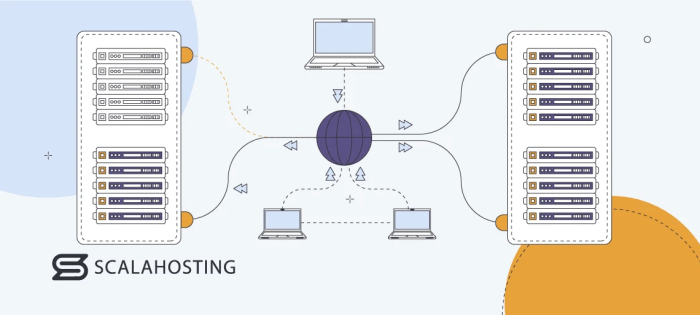
Load balancing distributes incoming requests across multiple servers, preventing any single server from becoming overloaded. This crucial technique prevents performance bottlenecks and ensures consistent response times for users. Effective load balancing ensures that your CRM system can handle fluctuating user demands without compromising performance.
- Different load balancing algorithms, such as round-robin, least connections, and weighted, each have unique characteristics that impact their effectiveness. Choosing the right algorithm depends on the specific requirements of your application.
- Round-robin distributes requests sequentially among available servers. Least connections directs requests to the server with the fewest active connections, ensuring an even distribution of workload.
- Weighted load balancing gives priority to certain servers based on their capacity or performance. This is particularly useful for scenarios where some servers might be more powerful or have more resources.
Failover Mechanisms, How to Ensure High Availability for Your CRM System with Hosting
Failover mechanisms automatically switch to a backup server if the primary server fails. This ensures minimal disruption to users and maintains business continuity. A failover system is a critical component of any high availability architecture. A well-designed failover mechanism guarantees uninterrupted service.
- Implementing failover requires careful planning and configuration to ensure smooth transitions between servers. This includes verifying that the backup server is properly configured and ready to take over.
- Failover strategies can range from simple failover to more complex solutions that involve automated switching and failover testing. A failover solution needs to be thoroughly tested to ensure smooth transitions and minimal impact on users.
Clustering
Clustering combines multiple servers into a single logical unit. This improves system redundancy, allowing the system to continue operating even if one or more servers fail. Clustering provides an excellent approach to increase system reliability. The increased redundancy offered by clustering can significantly improve system availability.
- Clustering enhances system performance and scalability. This is accomplished by distributing the workload across multiple servers, allowing the system to handle a greater volume of requests.
- Clustering solutions come in various forms, ranging from simple setups to complex architectures. The type of clustering solution used depends on the specific needs and requirements of your CRM system.
Monitoring Tools
Monitoring tools track system performance metrics, such as CPU usage, memory consumption, and network traffic. This real-time visibility enables proactive identification and resolution of potential issues before they impact users. Continuous monitoring is essential to ensure system performance and stability. Proactive monitoring prevents potential service interruptions.
- Monitoring tools provide valuable insights into system health and performance, allowing for timely intervention to prevent outages and maintain optimal performance.
- Regular monitoring reports and alerts allow for timely responses to potential issues, preventing service interruptions and maintaining optimal system performance.
Load Balancing Algorithm Comparison
| Algorithm | Description | Suitability |
|---|---|---|
| Round-robin | Distributes requests sequentially. | Good for simple scenarios, fair distribution. |
| Least Connections | Sends requests to the server with fewest active connections. | Good for balancing load dynamically. |
| Weighted | Prioritizes servers based on capacity or performance. | Best for scenarios with varying server capabilities. |
Choosing the Right Hosting Provider for High Availability
Picking the right hosting provider for your CRM is crucial for high availability. It’s not just about the tech; it’s about finding a partner who understands your business needs and is committed to keeping your system up and running. You need a provider who prioritizes uptime and offers robust support to handle unexpected issues quickly. A reliable hosting partner can significantly impact your CRM’s performance and your bottom line.
Factors to Consider When Selecting a Hosting Provider
Choosing a high-availability hosting provider involves more than just price. Several key factors influence your CRM’s uptime and overall performance. You need a provider with a proven track record, a clear understanding of your needs, and a commitment to keeping your system running smoothly.
- Uptime Guarantees and Service Level Agreements (SLAs): A critical factor is the provider’s commitment to uptime. Look for providers with explicit uptime guarantees, often expressed in service level agreements (SLAs). These SLAs Artikel the provider’s responsibility to maintain the system’s availability. Understanding the terms of the SLA is essential to determine if the provider meets your needs. A strong SLA is a testament to the provider’s commitment to high availability.
- Technical Support and Responsiveness: A dedicated and responsive support team is invaluable. Look for providers who offer 24/7 support, detailed documentation, and readily available contact channels. Rapid response times and helpful troubleshooting are key to minimizing downtime and ensuring swift resolution of issues.
- Infrastructure and Redundancy: The provider’s infrastructure plays a significant role in high availability. Look for providers with multiple data centers, redundant servers, and backup systems. This redundancy is essential for maintaining uptime during unexpected outages. Providers with a robust infrastructure are more likely to handle fluctuations in demand and unexpected problems.
- Security Measures: Security is paramount. A reliable hosting provider should have robust security measures in place to protect your CRM data from threats like cyberattacks and data breaches. Look for providers with proven security certifications and protocols.
Importance of Uptime Guarantees and SLAs
Uptime guarantees and service level agreements (SLAs) are crucial for ensuring high availability. These documents define the provider’s commitment to maintaining the system’s uptime and Artikel penalties for failing to meet these commitments. A strong SLA is more than just a document; it’s a contract reflecting the provider’s commitment to your business.
- Clear Definitions of Uptime: SLAs should clearly define what constitutes “uptime.” This might include specific metrics like the number of hours the system is operational, or the number of minutes of downtime allowed per month. Look for concrete, quantifiable metrics.
- Penalties for Downtime: SLAs often include penalties for downtime exceeding the agreed-upon limits. These penalties can be financial or otherwise, and their clarity is vital to avoid disputes. Understand the implications of exceeding the SLA and the potential costs of downtime.
- Impact on Business Continuity: A reliable SLA translates to fewer disruptions in your business operations. Downtime can lead to significant financial losses, customer dissatisfaction, and operational hiccups. By carefully evaluating SLAs, you can minimize these risks.
Significance of Technical Support and Responsiveness
Prompt and effective technical support is vital for maintaining high availability. A reliable support team can quickly diagnose and resolve issues, minimizing downtime. Quick issue resolution translates directly to reduced disruption of your CRM’s functionality.
- 24/7 Support: Critical systems, like CRMs, often require 24/7 support. Downtime can occur at any time, so a provider with a 24/7 support team is essential for quick issue resolution.
- Comprehensive Documentation: Thorough documentation is crucial for self-service troubleshooting. Easy-to-understand documentation empowers your team to address minor issues independently. Comprehensive knowledge bases and guides are a major plus.
- Response Times: Fast response times are key. The quicker a support team responds to issues, the less time your CRM is unavailable. Track the response times of potential providers to gauge their efficiency.
Different SLA Terms and Their Impact
Different SLA terms impact high availability in varying ways. Understanding the nuances of these terms is essential to choosing a provider that aligns with your needs. A comprehensive SLA is crucial for avoiding ambiguity and potential issues.
- “Service Level Objective” (SLO): An SLO sets a target for uptime. While not legally binding, it serves as a performance indicator for the provider. It is a measurable target for performance.
- “Service Level Agreement” (SLA): An SLA Artikels the provider’s commitment to maintaining a specific level of service. It defines the terms of the agreement, including the expected uptime, response times, and penalties for non-compliance. This formal agreement holds the provider accountable.
Key Criteria for Evaluating Hosting Providers
Evaluating hosting providers requires a structured approach. The following table Artikels key criteria to consider when making your selection. A checklist like this can help you ensure you are making an informed decision.
| Criteria | Description | Importance |
|---|---|---|
| Uptime Guarantee | Percentage of guaranteed uptime | Essential for business continuity |
| SLA Details | Specific terms and conditions | Defines provider’s commitment |
| Support Response Time | Average time to resolution | Impacts downtime duration |
| Infrastructure Redundancy | Multiple data centers, backup systems | Ensures high availability |
| Security Measures | Security certifications, protocols | Protects data from breaches |
Implementing High Availability in Your CRM System
High availability in your CRM is not just a nice-to-have; it’s a necessity for businesses that rely on their data. Downtime translates directly to lost revenue, frustrated customers, and damaged brand reputation. A robust high-availability setup ensures your CRM system is always running, no matter what. Let’s dive into the practical steps to implement this critical feature.Implementing a high-availability CRM system requires a structured approach that anticipates potential failures and ensures seamless transitions.
It’s not just about having extra servers; it’s about carefully orchestrating their interactions to provide continuous service. This involves a combination of hardware, software, and strategic planning.
Setting Up a High-Availability CRM System
To build a high-availability CRM system, you need a plan. This involves careful consideration of the components, configurations, and testing. The foundational elements of a high-availability system are redundant servers, load balancing, and failover mechanisms. Each component plays a critical role in ensuring continuous operation.
Configuring Redundant Servers
Redundant servers are the backbone of high availability. They provide a backup in case one server fails. Configuring these servers involves replicating the CRM database and application across multiple machines. This process ensures that if one server goes down, the other servers can seamlessly take over. This redundancy is critical for minimizing downtime.
- Database Replication: Implement a database replication strategy to ensure that all servers have identical copies of the CRM database. This ensures that if one server fails, the data is still accessible from another. A common strategy is synchronous replication, which ensures that all servers have the same data simultaneously. Asynchronous replication, while slightly less reliable, can be faster in some scenarios.
- Application Replication: Replicate the application software across all servers. This ensures that if one server fails, the application is still accessible from another. This often involves using clustering technologies to maintain application consistency across the servers.
- Server Placement: Strategically place redundant servers in geographically dispersed locations to reduce the impact of local disasters. This helps ensure that your system remains operational even if one location is affected by a natural disaster or other incident.
Implementing Load Balancing
Load balancing distributes incoming traffic across multiple servers, preventing any single server from being overloaded. This is crucial for maintaining performance and preventing bottlenecks.
Ensuring high availability for your CRM system hinges on a solid hosting strategy. Choosing the right server hosting is crucial, and understanding factors like uptime guarantees and redundancy is key. Check out our guide on How to Choose Server Hosting for Your CRM SaaS Business to learn how to pick a reliable hosting provider that aligns with your CRM needs.
Ultimately, the right hosting will ensure your CRM is always up and running, boosting customer satisfaction and your bottom line.
- Hardware Load Balancers: Dedicated hardware load balancers are commonly used for their efficiency and advanced features. They can handle a large volume of traffic and provide sophisticated routing algorithms.
- Software Load Balancers: Software load balancers are often integrated into cloud platforms. They provide load balancing capabilities within the software architecture of your system. These are frequently a cost-effective option, especially for smaller to mid-sized deployments.
- Algorithm Selection: Choose the appropriate load balancing algorithm (e.g., round-robin, least connections) based on your specific needs. This will determine how traffic is distributed among the servers.
Configuring Failover Mechanisms
Failover mechanisms automatically switch traffic to a backup server if a primary server fails. This ensures minimal downtime and maintains uninterrupted service.
- Monitoring Tools: Implement monitoring tools to track the health and performance of each server. These tools detect failures proactively, allowing the failover mechanism to kick in quickly.
- Failover Triggering: Define the criteria for triggering failover, such as server response time, CPU usage, or network connectivity. These criteria will determine when the system automatically switches to the backup server.
- Failover Testing: Thoroughly test failover mechanisms to ensure they work as expected. Simulate server failures and validate that the system seamlessly transitions to the backup server.
Testing and Validating High-Availability Setup
Thorough testing is critical to ensure your high-availability setup functions correctly. Simulating real-world scenarios is essential for verifying system performance under pressure.
Ensuring high availability for your CRM system hinges on a solid hosting strategy. Choosing the right server hosting is crucial, and understanding factors like uptime guarantees and redundancy is key. Check out our guide on How to Choose Server Hosting for Your CRM SaaS Business to learn how to pick a reliable hosting provider that aligns with your CRM needs.
Ultimately, the right hosting will ensure your CRM is always up and running, boosting customer satisfaction and your bottom line.
- Simulated Failures: Simulate failures of individual servers and components to test the failover mechanisms. This helps ensure the system can handle unexpected issues gracefully.
- Performance Metrics: Monitor performance metrics such as response time, error rates, and throughput during testing. These metrics help identify potential bottlenecks and areas for improvement.
- User Acceptance Testing (UAT): Involve end-users in testing the high-availability setup to ensure the system meets their needs and expectations. This critical step validates the system’s usability in a real-world scenario.
Monitoring and Maintaining High Availability
Keeping your CRM system humming along smoothly isn’t just about setting up a robust hosting solution; it’s about constant vigilance. High availability isn’t a one-time thing; it’s an ongoing process of monitoring, maintenance, and adaptation. Ignoring this crucial step can lead to costly downtime and lost revenue. Think of it like a high-performance engine – you need to keep an eye on its vitals to prevent catastrophic failure.
Importance of Ongoing Monitoring
Constant monitoring of your CRM system is vital for proactively identifying and resolving potential issues before they escalate into major outages. This proactive approach minimizes downtime, preserves customer trust, and protects your business’s bottom line. By regularly checking key metrics, you can catch problems early and prevent minor issues from snowballing into significant disruptions. Real-time monitoring allows for swift responses to emerging trends, ensuring that your CRM system remains available and responsive.
Tools and Techniques for Monitoring System Performance
Several tools and techniques can be used to monitor your CRM system’s performance and identify potential issues. These range from dedicated monitoring software to custom scripts designed for specific CRM applications. Effective monitoring goes beyond simply checking system uptime; it involves analyzing response times, resource utilization, and user activity. This comprehensive approach allows you to pinpoint the source of any performance bottlenecks.
Logging and Analyzing System Events
Thorough logging and analysis of system events are critical for understanding the root cause of issues. This process involves capturing detailed information about every action within the system, including errors, warnings, and successful transactions. By analyzing these logs, you can identify patterns, pinpoint recurring problems, and predict potential future issues. Robust logging systems provide valuable data for troubleshooting, performance optimization, and security audits.
Detailed log analysis helps you to understand the intricacies of your CRM system, enabling informed decisions regarding its maintenance and future development.
Best Practices for Proactive Maintenance
Proactive maintenance is key to preventing outages and ensuring high availability. This includes regular system backups, scheduled maintenance windows, and thorough testing of disaster recovery plans. Testing these plans is crucial, as it allows you to identify weaknesses and refine procedures before a real-world crisis. For example, regularly backing up your CRM data ensures that you have a readily available copy in case of unexpected data loss.
Monitoring Tools and Their Features
| Monitoring Tool | Key Features | Pros | Cons |
|---|---|---|---|
| New Relic | Application performance monitoring, infrastructure monitoring, and distributed tracing. | Comprehensive data and powerful analysis tools. Good for large-scale systems. | Can be complex to set up and use. May have a steep learning curve. |
| Datadog | Infrastructure monitoring, application performance monitoring, and security monitoring. | Excellent for visualizing system metrics and identifying trends. | Can be expensive for smaller businesses. |
| Prometheus | Open-source monitoring system that can be customized to track virtually any metric. | Highly customizable and scalable. Cost-effective for smaller and medium-sized businesses. | Requires significant technical expertise for setup and configuration. |
| Grafana | Data visualization tool that works with various data sources, including Prometheus. | Excellent visualization capabilities. Useful for generating insightful reports. | Requires a separate monitoring tool (like Prometheus) to collect the data. |
Regular monitoring and maintenance procedures are essential for maintaining the high availability of your CRM system. By using the right tools and techniques, you can proactively identify and resolve potential issues, minimize downtime, and ensure a smooth and reliable user experience.
Case Studies and Examples of High Availability CRM Deployments
High availability isn’t just a buzzword; it’s a necessity for modern businesses reliant on CRM systems. Imagine your entire sales pipeline grinding to a halt because your CRM went down. That’s a disaster waiting to happen. Real-world case studies demonstrate how robust high-availability deployments can prevent such crippling outages and keep businesses running smoothly. Let’s dive into some compelling examples.High-availability CRM deployments are not just about preventing downtime; they’re about ensuring consistent, reliable access to crucial data.
This translates directly into smoother operations, faster response times, and ultimately, a better customer experience. By learning from others’ successes and failures, we can equip ourselves with the knowledge to build a truly resilient CRM system.
Real-World Examples of Successful Deployments
Several companies have successfully implemented high-availability CRM systems. One notable example involves a large e-commerce retailer that experienced significant growth and saw their existing CRM struggle to handle the increased volume of transactions. By migrating to a cloud-based, high-availability solution, they were able to maintain seamless operations during peak periods, ensuring that customer orders were processed efficiently and that customer support inquiries were addressed promptly.
This proactive approach to high availability prevented lost revenue and maintained customer satisfaction. Another example involves a financial services company that experienced a significant data breach. Their high-availability CRM system allowed them to quickly restore their operations and retrieve data, mitigating the impact of the incident. This demonstrates how high availability is crucial not only for day-to-day operations but also during critical events.
Challenges Faced and How They Were Overcome
Implementing high availability isn’t always straightforward. One common challenge is the cost of implementing redundant systems and infrastructure. However, the return on investment (ROI) is often substantial. Companies often overcome this by strategically choosing a cloud-based solution that offers scalable resources. Another challenge is the complexity of integrating various components within the high-availability system.
A well-defined integration strategy and careful planning, along with experienced IT professionals, can overcome this challenge. In addition, companies need to consider the potential impact on their existing IT infrastructure and staff training. By addressing these concerns proactively, businesses can create a robust and reliable CRM system that minimizes downtime and maximizes operational efficiency.
Impact on Business Operations and Continuity
High availability directly impacts business operations by ensuring continuous access to crucial data and applications. A company that experienced a significant drop in sales during a period of CRM downtime learned the importance of high availability and how a well-designed system can significantly enhance business continuity. By minimizing downtime and ensuring consistent access, businesses can maintain a smooth workflow and continue serving their customers effectively.
High availability also reduces the risk of lost revenue, customer dissatisfaction, and reputational damage.
Use Cases for High-Availability CRM Systems
| Use Case | Description | Impact on Business |
|---|---|---|
| E-commerce | Handling high transaction volumes during peak seasons, ensuring order processing efficiency. | Minimizes lost sales and maintains customer satisfaction. |
| Financial Services | Maintaining continuous access to financial data, crucial for transactions and reporting. | Ensures operational stability, reduces risk of financial loss. |
| Healthcare | Ensuring patient records are accessible for treatment and billing purposes, minimizing delays. | Improves patient care and operational efficiency. |
| Customer Support | Maintaining accessibility for customer inquiries and support, crucial for timely responses. | Enhances customer experience, improves reputation. |
Cost Considerations of High Availability
High availability CRM systems aren’t just about fancy tech; they’re about protecting your bottom line. A system that’s always on, always accessible, and always performing is a system that prevents costly downtime and lost revenue. But implementing this level of reliability comes with a price. Let’s dive into the financial realities of high availability CRM hosting.High availability isn’t just about throwing more servers at the problem; it’s about a strategic approach to redundancy, failover, and monitoring.
Understanding the different costs involved—from initial investment to ongoing maintenance—is crucial for making informed decisions about your CRM infrastructure. We’ll break down the various costs, compare solutions, and look at how to calculate the true ROI of this critical investment.
Financial Implications of High Availability Hosting
The initial investment for high-availability hosting can be substantial, requiring upfront capital for redundant hardware, software licenses, and potentially specialized personnel. Furthermore, ongoing maintenance costs, including software updates, security patches, and staff time for monitoring and troubleshooting, can accumulate over time. These factors need careful consideration during the planning and budgeting stages.
Comparison of High Availability Solutions
Different high-availability solutions offer varying levels of protection and performance at different price points. Cloud-based solutions, for example, often have lower upfront costs but potentially higher ongoing fees based on usage. Dedicated server solutions offer greater control and customization, but come with higher initial investment and ongoing maintenance responsibilities. Hybrid solutions combine elements of both, offering a balance between cost and control.
Return on Investment (ROI) for High Availability CRM Systems
The ROI of high-availability CRM systems isn’t always immediately apparent. However, by calculating the potential revenue lost during downtime, the cost of customer dissatisfaction, and the potential savings from reduced support calls, you can often identify a positive ROI. For example, a company that processes $1 million in transactions per day could lose significant revenue in a single outage, while proactive high-availability solutions can mitigate this risk.
Importance of Budgeting for High Availability Infrastructure
A well-defined budget for high-availability infrastructure is essential for managing costs and ensuring that the project stays on track. A comprehensive budget should include projected costs for hardware, software, personnel, and maintenance. Furthermore, consider contingency funds to account for unforeseen expenses or market fluctuations.
Total Cost of Ownership (TCO) Comparison for Various Hosting Options
| Hosting Option | Initial Cost | Ongoing Maintenance | Support Costs | Total Cost of Ownership ||—|—|—|—|—|| Cloud-Based (IaaS) | Relatively Low | Moderate to High (based on usage) | Variable (often included in pricing) | Moderate to High || Dedicated Server | High | High (includes hardware maintenance, OS updates, security) | High (dedicated support staff required) | High || Hybrid (Cloud + Dedicated) | Moderate | Moderate to High | Moderate | Moderate to High |This table provides a high-level comparison.
Specific costs will vary based on provider, features, and usage. Thorough research and detailed cost analysis are crucial for accurate cost estimations. Remember that high availability isn’t just about the initial cost; it’s about the total cost of ownership over time.
Last Point
In conclusion, achieving high availability for your CRM system with hosting requires a multi-faceted approach encompassing the right hosting provider, robust infrastructure, and proactive monitoring. By carefully evaluating your needs, implementing the discussed strategies, and continually optimizing your system, you can ensure your CRM operates seamlessly, providing valuable data and insights for your business operations. This translates to increased productivity, minimized downtime, and a more reliable and efficient workflow.
FAQ Overview
What are the common causes of CRM system downtime?
Common causes include hardware failures, software glitches, network outages, security breaches, and insufficient data backups. Proper planning and mitigation strategies are key to minimizing these risks.
How much does high-availability hosting cost compared to standard hosting?
High-availability hosting typically involves more robust infrastructure, redundant components, and specialized expertise, leading to a higher upfront cost. However, the long-term benefits, including reduced downtime and improved productivity, often outweigh the initial investment.
What are some free tools for monitoring CRM system performance?
While many paid tools are available, free options like Nagios and Zabbix can offer basic monitoring functionalities for your CRM system. However, consider their limitations and scalability needs before relying solely on free options.
What is the difference between load balancing and failover mechanisms?
Load balancing distributes traffic across multiple servers, improving performance and preventing overload. Failover mechanisms automatically switch to a backup server if the primary server fails, ensuring continuous operation.